

In a world where digital transformation accelerates by the year, organizations across industries are redefining how they connect with customers. Nowhere is this shift more profound than in the financial sector. As we advance into 2026, Financial marketing no longer relies on intuition or historical segmentation alone, it demands precise data insights that reveal not just who customers are, but how they behave, interact, and respond to dynamic financial services.
What makes 2026 pivotal is the convergence of advanced financial analytics with consumer psychology, real-time behavior tracking, and algorithmic prediction models that completely transform how financial institutions identify, understand, and target customers. The intersection of data science and consumer insight is rewiring the financial marketing playbook – elevating relevance, personalization, and measurable growth.
This article explores how financial analytics reshapes consumer targeting in 2026 and why forward-thinking marketers must embrace these changes to remain competitive.
1. The Evolution of Financial Marketing
Financial marketing began as a relatively linear practice – broadcasters bought airtime, banks distributed flyers, and customer call lists defined outreach. But as digital ecosystems matured, so did customer expectations:
- demand for personalization;
- need for privacy-aware data handling;
- expectation of seamless digital experiences;
- instant relevance across channels.
Financial marketing 2026 is not just about broadcasts and impressions. It is about contextual relevance – delivering the right message, to the right person, at the right time, with measurable business outcomes. Financial analytics enables this transformation.
2. What Financial Analytics Really Means in 2026
At its core, financial analytics in 2026 is the science of extracting insights from the massive quantities of data generated across financial platforms – from mobile banking apps to point-of-sale data, from insurance portals to credit applications.
Key components include:
- Descriptive analytics — what happened?
- Diagnostic analytics — why did it happen?
- Predictive analytics — what will likely happen?
- Prescriptive analytics — what should be done?
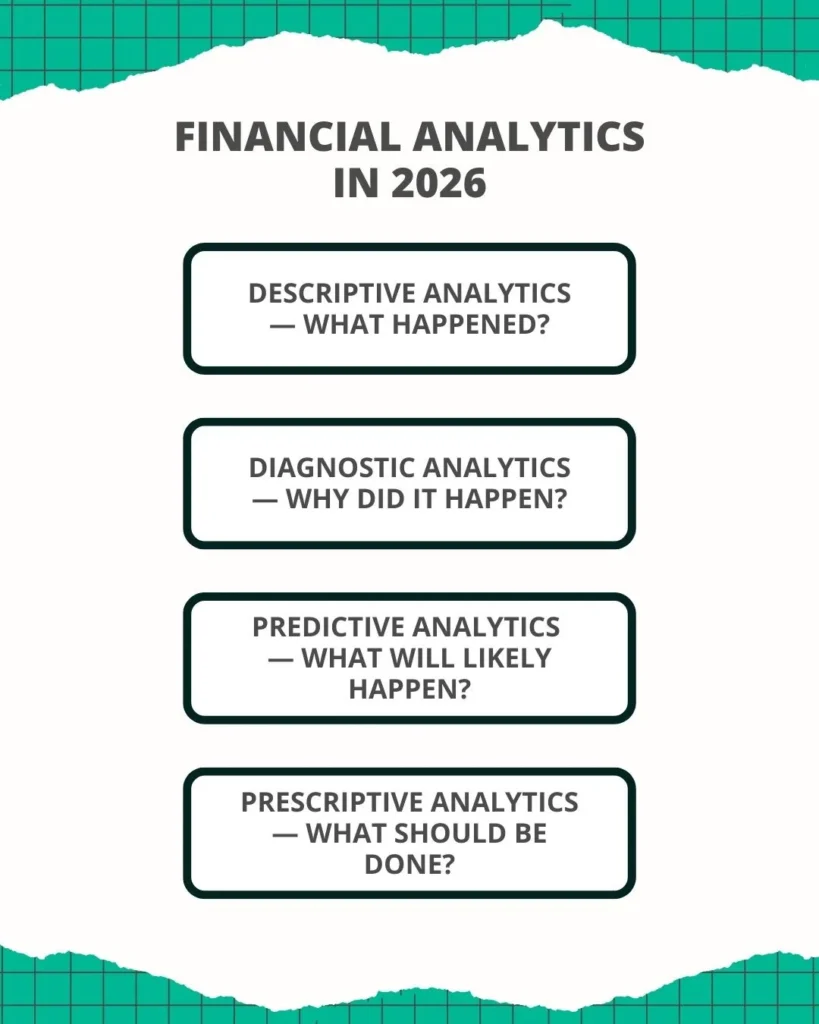
These pillars allow financial marketers to map customer journeys, identify behavioral segments, forecast future needs, and optimize targeting strategies. Models based on machine learning and neural networks elevate analytics from reporting to recommendation engines that define effective campaigns.
3. Redefining Target Customers with Real-Time Data
Traditional segmentation once relied on demographics: age, income, occupation. Now, Financial Analytics integrates:
- behavioral tracking (clickstream, transaction history);
- psychographic modeling (values, motivations);
- contextual signals (location, time-of-day patterns);
- external influences (market trends, economic indicators).
These data points form dynamic profiles that evolve, allowing institutions to predict needs before they are expressed. Understanding these micro-behaviors enables financial marketers to target customers with offers that feel intuitive and relevant.
4. The Power of Predictive Models in Financial Targeting
Predictive analytics plays a central role in anticipating customer needs:
- identifying customers likely to adopt new products;
- highlighting cross-sell and up-sell opportunities;
- detecting churn risk and implementing retention campaigns;
- forecasting credit behavior with higher accuracy.
In 2026, predictive models ingest billions of variables and generate actionable scores. For example, rather than sending a generic home loan offer to a broad age group, financial institutions can now target individuals whose recent behavior – browsing mortgage calculators, saving patterns, credit score improvements — predicts a high likelihood of home-buying within three months.
This caliber of insight exemplifies the new frontier of financial marketing that is both precise and scalable.
5. Measuring Engagement Beyond Clicks: Outcome-Based Metrics
The era of counting clicks is over. Financial marketing performance is now evaluated using outcome-based metrics:
- conversion value (not just clicks);
- customer lifetime value (CLV);
- acquisition cost per quality customer;
- revenue per targeted segment;
- retention and referral rates.
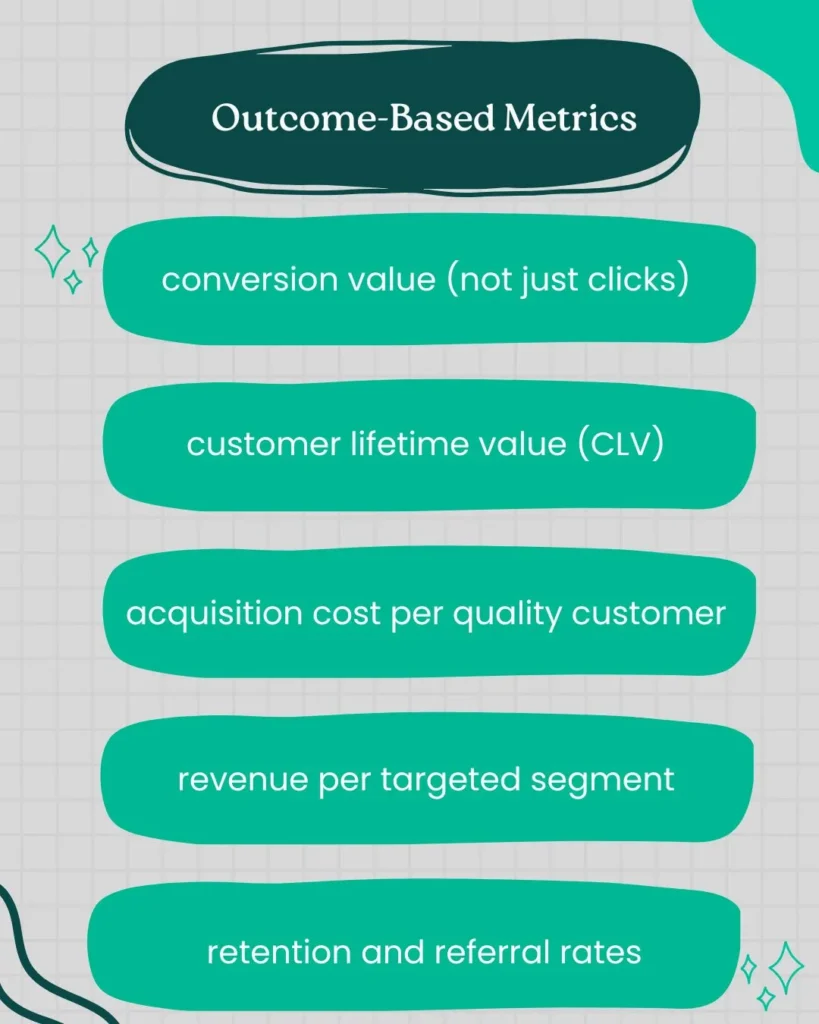
These metrics are possible only because financial analytics connects campaign data with real-world financial outcomes. When a personalization algorithm increases loan approvals with lower risk, the result is not just engagement – it is measurable revenue.
6. Personalization at Scale: AI-Driven Messaging
Artificial Intelligence infuses financial campaigns with context-aware personalization. Content, offers, and timing are determined algorithmically based on user behavior and predicted intent.
Examples include:
- tailored credit card reward offers;
- semi-automated financial advice via chatbots;
- personalized retirement planning suggestions;
- contextual nudges (e.g., savings nudges after payday).
When targeting is executed with such precision, customers feel understood, not marketed to – the hallmark of excellence in Financial Marketing 2026.
7. Ethical Analytics, Privacy, and Regulation
Perhaps the most critical consideration in 2026 is ethics. Financial institutions must balance data-driven insight with privacy compliance.
Key practices include:
- anonymized data sets;
- clear opt-in consent policies;
- transparent algorithmic decisioning;
- bias detection in AI models;
- ethical targeting guardrails.
The future of digital financial branding depends not just on ability to target customers effectively – but doing so responsibly.
8. Integration Across Channels: Unified Customer Views
In 2026, siloed marketing channels are obsolete. A unified customer view integrates:
- mobile app interactions;
- website behavior;
- in-branch engagement;
- call center history;
- social sentiment data.
This omnichannel approach ensures that messaging — from email to SMS to app notifications — is coherent, personalized, and relevant.
Financial Marketing in 2026 is about connected experiences that recognize the customer at every touchpoint.
Conclusion
The fusion of financial analytics with consumer insight is reshaping how institutions target customers, deliver relevance, and drive sustainable growth. In a landscape defined by data velocity and customer expectations, only those organizations that embrace analytics-driven marketing will thrive.
Financial Marketing 2026 is no longer optional – it is foundational to competitive advantage, customer value, and long-term loyalty. By leveraging advanced analytics, predictive models, ethical frameworks, and omnichannel strategies, financial institutions unlock meaningful engagement and measurable outcomes.
The institutions that master this transformation will define the future of financial services.
Looking for more industry-specific expertise? Dive into our blog to discover in-depth articles on Marketing, Construction, Manufacturing, and Agriculture.
References
- Mckinsey – Global Banking Annual Review 2025: Why precision, not heft, defines the future of banking → https://www.mckinsey.com/industries/financial-services/our-insights/global-banking-annual-review;
- Deloitte – 2026 banking and capital markets outlook → https://www.deloitte.com/us/en/insights/industry/financial-services/financial-services-industry-outlooks/banking-industry-outlook.html;
- Bcg – What Does Personalization in Banking Really Mean? → https://www.bcg.com/publications/2019/what-does-personalization-banking-really-mean;
- Hyperlink infosystem – Data Analytics in Banking: Key Strategies for 2025 → https://www.hyperlinkinfosystem.com/blog/data-analytics-in-banking;
- Corporate finance institute – The Ethics of AI in Finance: How to Detect and Prevent Bias → https://corporatefinanceinstitute.com/resources/data-science/ai-ethics-in-finance-detect-prevent-bias/;
- Investopedia – Financial Markets: Role in the Economy, Importance, Types, and Examples → https://www.investopedia.com/terms/f/financial-market.asp;
- Emeritus – Financial Marketing in 2026: Data-Driven Strategies for a Digital Economy → https://emeritus.org/blog/financial-marketing/.