

For decades, the conversation around sustainability focused primarily on the external world: saving the rainforests, protecting the oceans, and reducing carbon footprints. However, a significant paradigm shift has occurred. In 2026, we understand that planetary health and personal health are inextricably linked. The choices that heal the earth are often the exact same choices that heal our bodies.
Adopting eco-friendly habits is no longer just a trend for environmental activists, it has become the ultimate beauty and wellness upgrade. By reducing our exposure to toxins, improving the quality of the air we breathe, and nourishing our bodies with cleaner resources, we unlock a level of vitality that synthetic solutions simply cannot match. These healthy habits transform not just our ecological footprint, but our skin, our energy levels, and our longevity.
The Detox Effect: Clean Beauty and Skincare
The most immediate connection between “green” and “glam” is found in our bathroom cabinets. Conventional beauty products have long been laden with preservatives and stabilizers that, while shelf-stable, can be detrimental to human health.
The “Green Beauty” movement advocates for products that are biodegradable and non-toxic. When you switch to eco-friendly skincare, you are essentially reducing your body’s “chemical load” – the accumulated burden of toxins in your system.
Why it boosts your health:
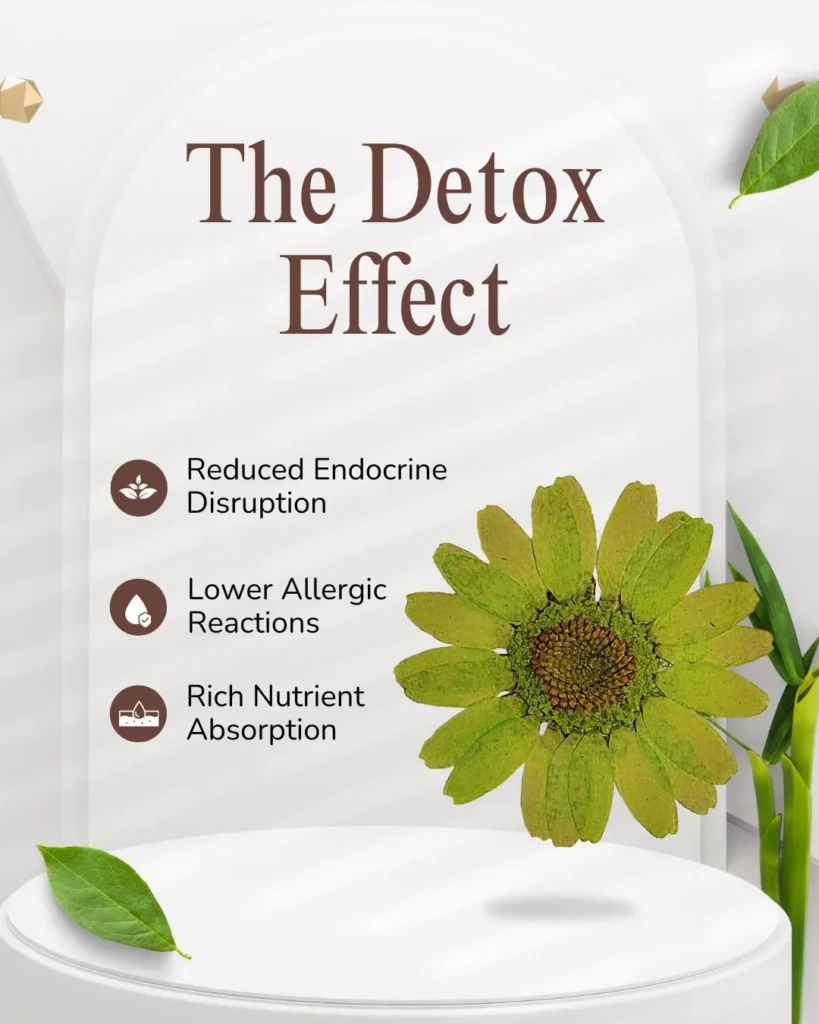
- Reduced Endocrine Disruption: Many conventional plastics and cosmetics contain phthalates and parabens, which mimic hormones. Eliminating these stabilizes your hormonal balance, leading to clearer skin and better mood regulation.
- Lower Allergic Reactions: Synthetic fragrances are top allergens. Natural, plant-based alternatives are generally gentler on the skin barrier.
- Rich Nutrient Absorption: Eco-friendly products often use cold-pressed oils and raw butters that retain vitamins A, C, and E, directly feeding the skin rather than just coating it with petroleum byproducts.
The Planetary Diet: Glowing from the Inside Out
There is an old saying: “You are what you eat.” In the context of sustainability, this is profoundly true. Industrial agriculture relies heavily on pesticides and antibiotics, residues of which often end up on our plates.
Integrating these eco-friendly habits into your diet—such as choosing organic, locally sourced, and predominantly plant-based foods—does more than reduce greenhouse gas emissions. It acts as a high-octane fuel for your body’s cellular repair mechanisms.
Key Health Benefits:
- Microbiome Diversity: A diet rich in varied plant fibers (essential for a low-carbon diet) supports a diverse gut microbiome. A healthy gut is directly linked to reduced inflammation and a radiant complexion.
- Reduced Toxin Intake: Organic produce, by definition, is grown without synthetic pesticides. By avoiding these, you reduce the workload on your liver and kidneys, allowing them to detoxify your body more efficiently.
- Higher Nutrient Density: Studies suggest that soil managed organically can produce crops with higher concentrations of antioxidants and flavonoids, which protect your cells from aging.
Sustainable Fashion: The Fabric of Wellbeing
Fast fashion is one of the world’s largest polluters, but it is also a silent aggressor against personal health. Synthetic fabrics like polyester and nylon are essentially plastics derived from petroleum. When we sweat, our pores open, and friction can cause micro-plastics and chemical dyes to interact with our skin.
Transitioning to a “Slow Fashion” wardrobe centered on natural fibers is a powerful step towards holistic health.
The biological advantages include:
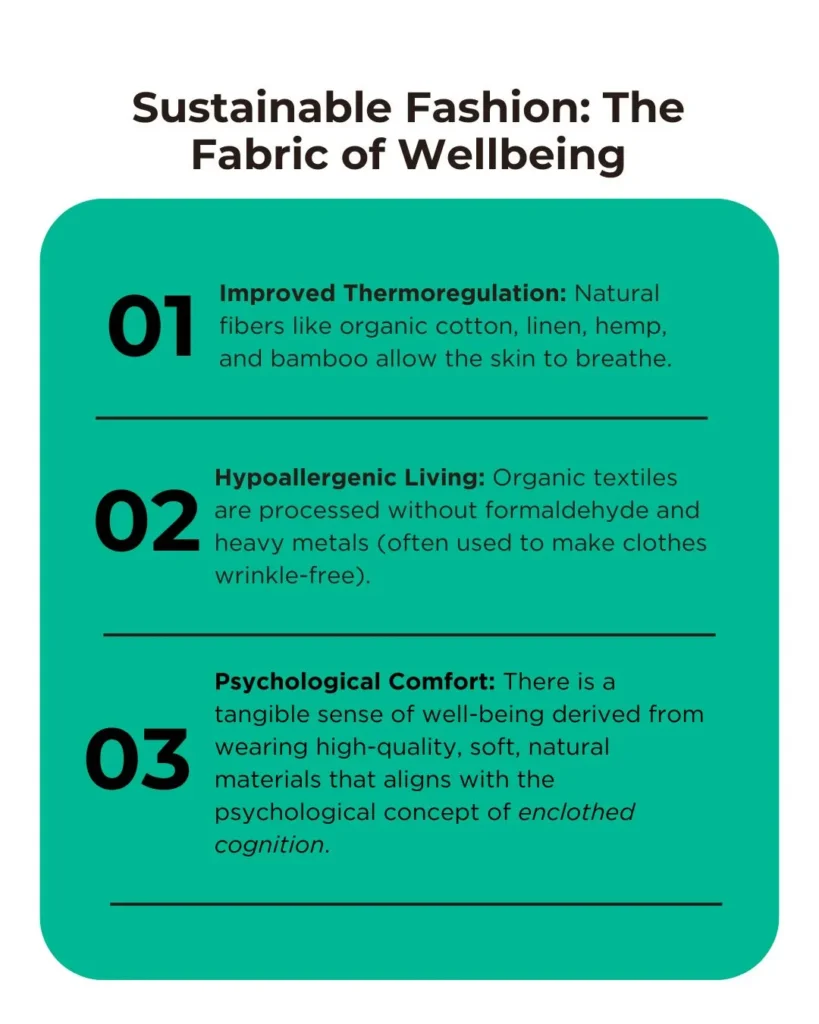
- Improved Thermoregulation: Natural fibers like organic cotton, linen, hemp, and bamboo allow the skin to breathe. This reduces bacterial growth, body odor, and skin rashes (contact dermatitis).
- Hypoallergenic Living: Organic textiles are processed without formaldehyde and heavy metals (often used to make clothes wrinkle-free), reducing the risk of chronic skin irritation.
- Psychological Comfort: There is a tangible sense of well-being derived from wearing high-quality, soft, natural materials that aligns with the psychological concept of “enclothed cognition” – feeling good in what you wear.
Green Interiors: The Air We Breathe
We spend approximately 90% of our time indoors. Unfortunately, indoor air can be up to five times more polluted than outdoor air due to “off-gassing” from synthetic carpets, paints, and furniture.
Creating an eco-friendly home is essentially creating a health sanctuary. By incorporating healthy habits such as using zero-VOC paints and bringing nature indoors, we drastically improve our respiratory health.
Strategies for a Healthy Eco-Home:
- Biophilic Design: Incorporating house plants (like Snake Plants or Peace Lilies) acts as a natural air filtration system, removing toxins like benzene and trichloroethylene.
- Natural Cleaning Products: Replacing bleach and ammonia-based cleaners with vinegar, essential oils, and plant-based surfactants protects your lungs and prevents skin burns or irritation.
- Better Sleep Quality: Natural bedding and mattresses (latex, wool, cotton) do not off-gas chemicals, ensuring that your body can fully regenerate during the night without fighting airborne toxins.
The Mental Connection: Nature as Therapy
Sustainability isn’t just physical, it’s psychological. The modern “eco-anxiety” many feel can be alleviated by taking action, but the act of connecting with nature itself is a proven stress reliever.
Japanese culture calls it Shinrin-yoku (Forest Bathing). Modern science calls it a necessity.
Mental Health Benefits:
- Cortisol Reduction: spending just 20 minutes in a green space lowers stress hormone levels, blood pressure, and heart rate.
- Enhanced Focus: Exposure to natural environments restores attention and reduces mental fatigue, a phenomenon known as Attention Restoration Theory (ART).
- Purpose and Community: Engaging in community gardening or local clean-ups fosters a sense of belonging and purpose, which are key pillars of long-term mental health.
Conclusion: A Unified Path to Radiance
The era of sacrificing comfort for the sake of the planet is over. Today, the most luxurious lifestyle is one that is clean, conscious, and connected to the natural world.
When we strip away the synthetics, the toxins, and the waste, we are left with purity – pure food, pure air, and pure materials. Ultimately, eco-friendly habits are synonymous with self-care. By respecting the environment, we learn to respect our own biology.
As we move toward 2026 and beyond, remember that every green choice is a vote for your own vitality. Whether it is choosing a glass water bottle over plastic, biking to work, or buying organic skincare, these sustainable routines become lifelong healthy habits that ensure you look good, feel good, and do good.
Expand your expertise. Explore our blog for in-depth insights on Education, Marketing, Agriculture, and other key industries.
References
- A. C. Gore, V. A. Chappell, S. E. Fenton, J. A. Flaws, A. Nadal, G. S. Prins, J. Toppari, R. T. Zoeller, EDC-2 – The Endocrine Society’s Second Scientific Statement on Endocrine-Disrupting Chemicals, Endocrine Reviews → https://doi.org/10.1210/er.2015-1010;
- Meeker JD, Sathyanarayana S, Swan SH. – Phthalates and other additives in plastics: human exposure and associated health outcomes → https://pmc.ncbi.nlm.nih.gov/articles/PMC2873014/;
- Pristiana Widyastuti – Eco-Friendly Beauty: What an Eco-Branding and Consumer Values Drive Purchase Intentions → https://www.researchgate.net/publication/388934236_Eco-Friendly_Beauty_What_an_Eco-Branding_and_Consumer_Values_Drive_Purchase_Intentions;
- Anne Marie Todd – The aesthetic turn in green marketing: Environmental consumer ethics of natural personal care productsethics of natural personal car → https://scispace.com/pdf/the-aesthetic-turn-in-green-marketing-environmental-consumer-37us4715pi.pdf;
- Park BJ, Tsunetsugu Y, Kasetani T, Kagawa T, Miyazaki Y. – The physiological effects of Shinrin-yoku (taking in the forest atmosphere or forest bathing): evidence from field experiments in 24 forests across Japan → https://pmc.ncbi.nlm.nih.gov/articles/PMC2793346/