
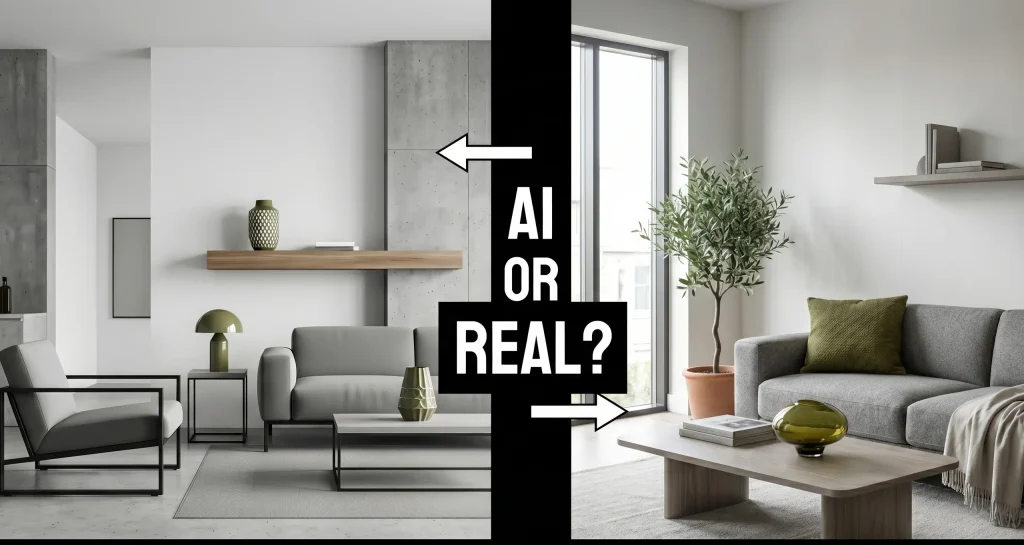
Nowadays, technology called Artificial Intelligence (AI) is everywhere. In interior design, it helps us find new ideas and quickly see what a room could look like. At first, we were all excited. Who wouldn’t want to get a stunning image in just a few seconds? However, this technology has also started creating big problems. Why? Because computer-generated images look perfect, but they are often impossible to build in reality. For many clients, the line between a pretty picture on a screen and what can actually be done in a real apartment has become very hard to see.
1. The problem of objects that don’t exist
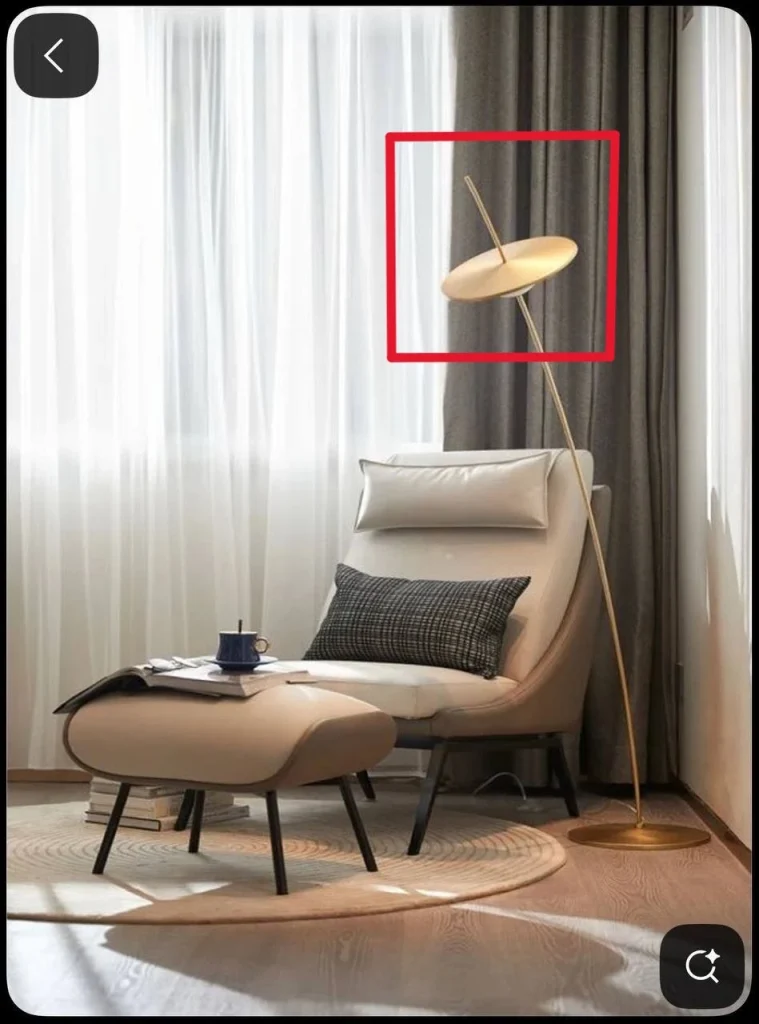
The biggest challenge arises when Artificial Intelligence draws things that cannot be bought. The algorithm doesn’t know what a store is or how furniture is manufactured. It just mixes colors and shapes to make them look good. Clients come to us with pictures generated on the internet and say: “I want exactly this lamp!” or “I want this bed!”. The problem is that specific lamp model doesn’t exist on the market, nor can it be built, because in the picture it has no power cables or mounting brackets.
The interior designer ends up being the “party pooper.” We have to explain to the client that the image is just a digital fantasy. We cannot buy something that was never manufactured. This confusion between what is real and what is drawn by a robot makes furnishing a home much harder and more exhausting than it used to be.

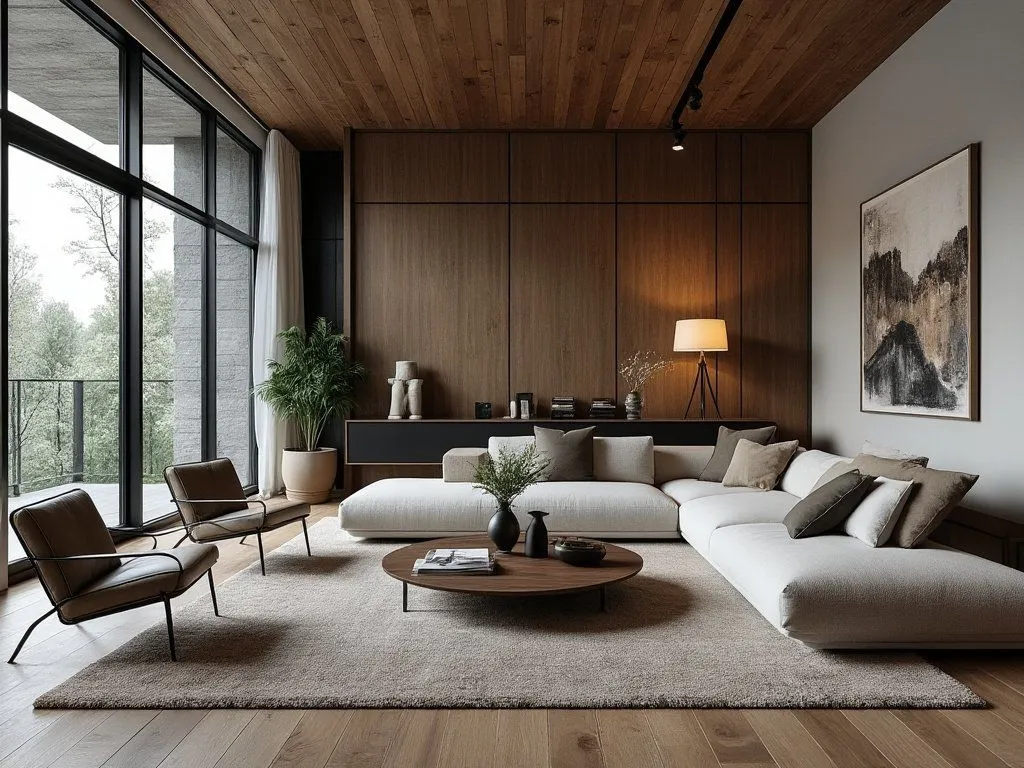
If you analyze the geometry of the image, you will notice typical AI rendering errors:
- The metal frame of the chairs merges illogically (on the left chair, the armrest melts directly into the cushion without a clear support structure).
- The legs of the tripod floor lamp in the background merge incorrectly from a physical standpoint.
- The seams and modules of the sofa lose their definition and blend asymmetrically on the right side.
2. When the robot becomes the design “boss”
Another issue is trust. An interior designer spends years learning how to combine colors, how to use light, and how to make a home comfortable. Now, many clients prefer to listen to an algorithm. They take the designer’s ideas and plug them into Artificial Intelligence programs to get an “opinion.” But the robot doesn’t know who you are, what your budget is, or that you have a small child who needs space to play. It provides a cold, mathematical answer that has nothing to do with your real life.
When a computer program dictates what your house should look like, the human connection is lost. Design isn’t just about looking good in photos; it’s about feeling good when you get home. Unfortunately, many people have started to trust software code more than their own senses or the advice of a specialist who talks to them face-to-face.
3. The infinite loop of endless changes
Perhaps the most exhausting stage is when the client takes my 3D concept, runs it through an AI image generator, and applies “filters” and new ideas, crudely painted over the room’s actual proportions.
The AI distorts the space, ignoring load-bearing walls, natural light, or plumbing and electrical installations, offering only a vague hint of a design. When the designer explains that the image adapted to their physical space simply won’t work, the response is often: “It doesn’t matter, this is what I want!”. The result? The render is created exactly as the client requested. Obviously, within the room’s real proportions, the result is disappointing. What does the client do? They take the new render, run it through the AI again, and demand another invented model. And thus, an infinite loop of endless modifications is created.
4. How we get back to reality
It is important to understand that technology should help us, not lead us. Artificial Intelligence is wonderful for inspiration at the beginning of the journey. We can look at photos to see what style we like. But after we have chosen the style, we must let the professional do the real project. A designer knows how big a hallway needs to be, what materials last over time, and how to fit within the money you have.
A human’s value cannot be replaced by an algorithm. We bring discipline and technical knowledge. We know that a house must be safe and easy to maintain, not just “spectacular” on a phone screen. Our role is to filter all those crazy ideas and turn them into something you can touch and use every day.
Conclusion: Your home is real, not virtual
In the end, we must remember one simple thing: we live in houses made of brick and concrete, not in pictures on the internet. Even if Artificial Intelligence gets smarter and smarter, it will never be able to replace the sense of reality. A dream home is built with patience, through discussions between people, and with respect for the designer’s craft. If we let robots decide everything, we risk ending up with projects that only look good in the virtual world but are impossible to live in. The future means using technology wisely, without forgetting that at the end of the day, we are the ones who need to feel “at home.”
Article created in collaboration with Forms Interiors design studio.
Read more articles about design, IT & AI , environment, marketing, education and more.
References
- Jansen, Katie → AI in Interior Design: A Tool, Not a Threat -Why Talented Designers Are Irreplaceable;
- Olena Shabanova → AI in Interior Design: Risks, Opportunities and Influence on the Designer’s Authorial Style;
- British Institute Interior Design → AI In Interior Design: The Pitfalls And The Potential;
- Reddit → What do you guys think of AI in interior design industry?.