
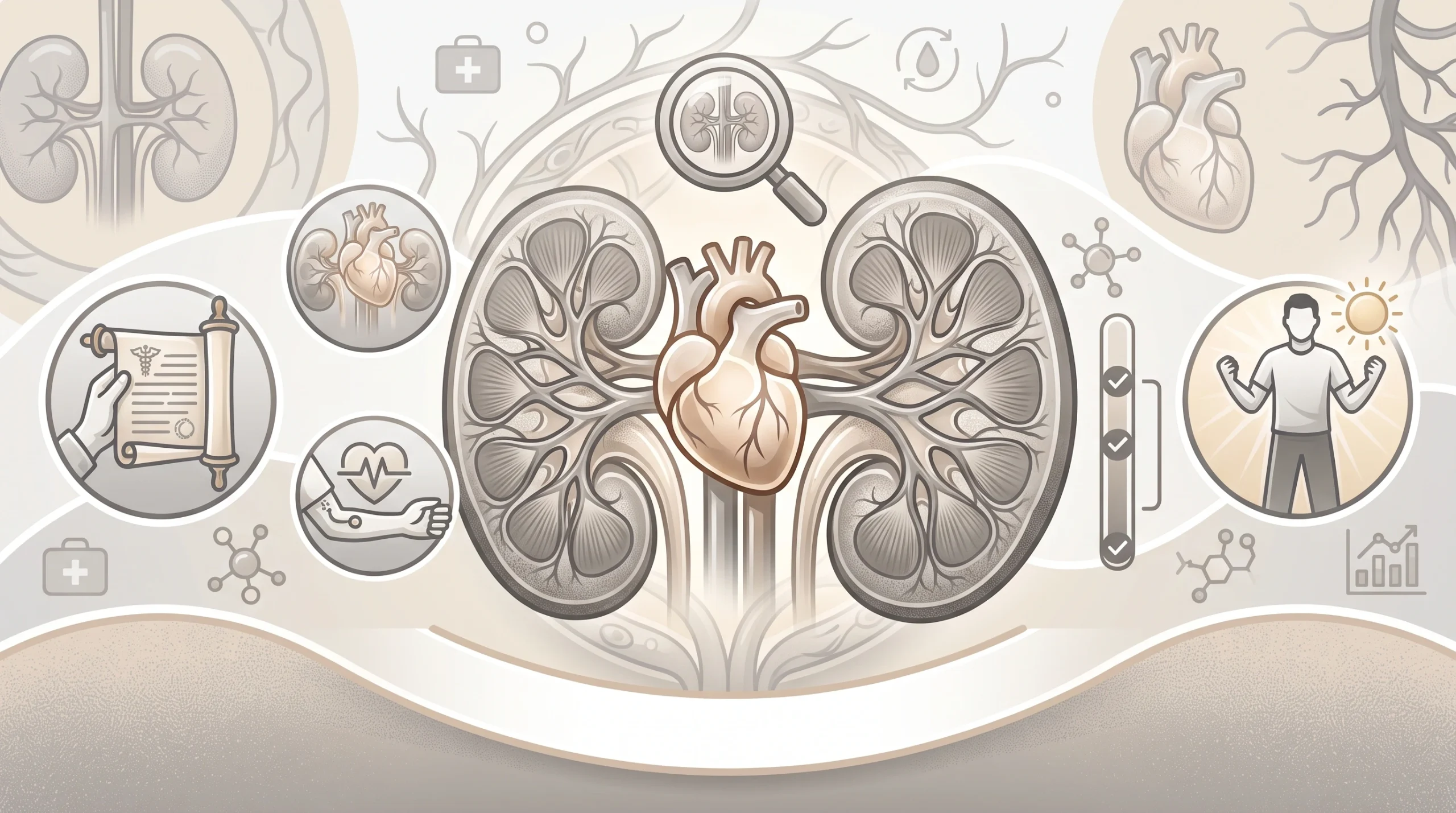
How many times have you woken up with a slightly puffy face and blamed last night’s salty dinner? Or felt completely drained of energy, convinced it was just the stress of the week?
The other day, I was reading an article from the Asian press about the warnings our body sends when our kidneys begin to fail in silence. It caught my attention because it touches on an issue most of us overlook: kidneys rarely hurt, and by the time obvious symptoms appear, their function is often already severely compromised.
I decided to dig deeper into the medical literature to see what the latest international research shows. The conclusions really got me thinking, and I believe everyone should know about them.
Discreet Signals: When “Stress” Masks a Real Issue
According to nephrologists cited in the media, there are several biological changes we dismiss all too easily:
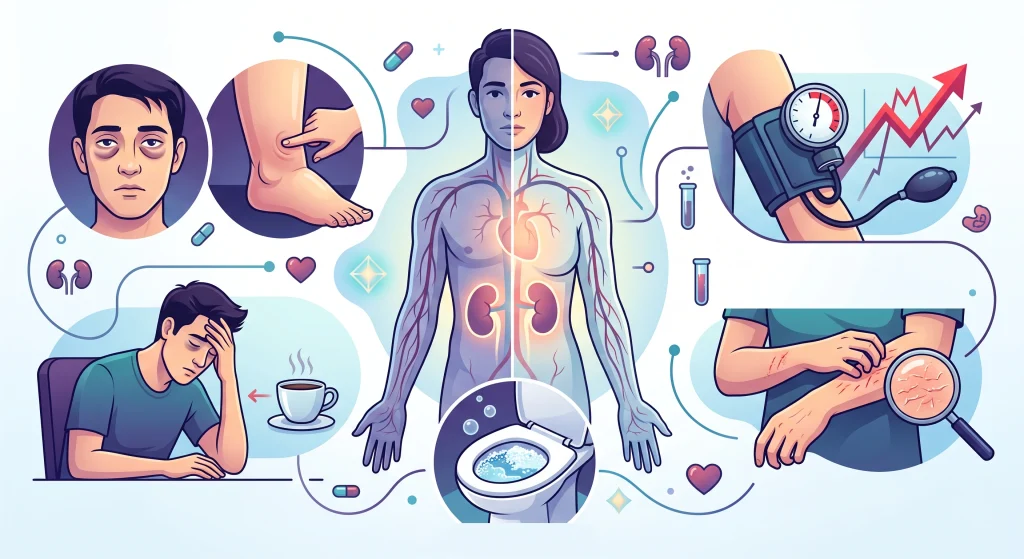
- Puffy eyes and swollen feet: When the renal filters (nephrons) no longer efficiently eliminate excess sodium and fluids, water is retained in the tissues. Morning puffiness around the eyes is often the first sign that proteins are leaking into the urine instead of staying in the bloodstream.
- Fatigue that coffee cannot fix: The kidneys produce an essential hormone called erythropoietin (EPO), which stimulates the bone marrow to produce red blood cells. Damaged kidneys secrete less EPO, leading to insidious anemia. In addition, unfiltered toxins accumulating in the bloodstream deepen brain fog and chronic exhaustion.
- Foamy urine: A dense, persistent foam (requiring multiple flushes to clear) is a classic sign of proteinuria (albumin leaking into the urine), a direct indicator of compromised renal filtration.
- Persistent itching and dry skin: This occurs as the mineral balance between calcium and phosphorus breaks down in more advanced stages.
- Blood pressure spiraling out of control: The kidneys and blood pressure are caught in a vicious circle. Kidneys regulate blood pressure; if they are damaged, pressure rises, and hypertension in turn destroys the delicate blood vessels in the kidneys.
Speaking of Science: What Landmark Studies Reveal (The Lancet & GBD)
If you think this is a rare condition, figures from recent international studies tell a dramatic story:
According to the latest Global Burden of Disease (GBD) analysis, published in the prestigious medical journal The Lancet, chronic kidney disease currently affects approximately 800–850 million people worldwide (over 10–14% of the global adult population) and has climbed into the top 10 leading causes of death globally.
Two underestimated insights from this study:
- The direct link to the heart: The study shows that renal dysfunction contributes to approximately 11.5% – 12% of all global cardiovascular deaths. Many individuals never reach dialysis; they suffer a fatal cardiac event before kidney disease is ever formally diagnosed.
- The underdiagnosis paradox: Over 85–90% of people in the early stages of the disease do not know they have it, because the kidneys overcompensate remarkably before standard blood tests (without estimated glomerular filtration) display major abnormalities.
Conclusion: What Concrete Steps Can We Take Starting Tomorrow?
You do not need expensive or invasive tests to stay one step ahead. International KDIGO guidelines recommend two routine annual tests for everyone, especially those with hypertension, diabetes, or a family history:
- eGFR (Estimated Glomerular Filtration Rate): Calculated automatically from a routine creatinine blood test.
- UACR (Urine Albumin-to-Creatinine Ratio): A simple morning urine sample that detects even microscopic amounts of lost protein.
Our body speaks to us constantly, but it rarely shouts. Most of the time, it whispers through a swollen foot, persistent fatigue, or blood pressure that refuses to drop. It pays to listen.
Read more useful articles and health updates on our blog.
References
- Jansen, Katie → Chronic Kidney Disease Mortality, Prevalence, and DALY Estimates 1990-2023;
- Vietnam.vn it’s Vietnam → Dacă organismul tău prezintă aceste semne, fii atent, rinichii tăi ar putea fi slăbiți;
- Zingnews → Cơ thể xuất hiện dấu hiệu này, coi chừng thận đang suy yếu;
- Global Burden of Disease → Global burden of chronic kidney disease and risk factors, 1990–2021: an update from the global burden of disease study 2021.