
A deep dive into B2B marketing 2026. We explore how industrial branding is shifting from product specs to Digital Twins1, AI-driven personalization, and sustainability data to win contracts.
The industrial sector has historically been the slowest to adopt digital marketing trends. However, by 2026, the landscape has changed irreversibly. The decision-makers in manufacturing, logistics, and construction are no longer baby boomers relying on handshake deals, they are digital natives who expect the same speed and personalization in buying a $5 million turbine as they do when buying a pair of sneakers. To survive, manufacturers must overhaul their strategies. The successful execution of B2B marketing 2026 relies less on trade show booths and more on immersive technology, radical data transparency, and artificial intelligence.
1. The Digital Twin as the New Sales Brochure
In the past, industrial branding relied on technical specification sheets and static CAD drawings. In 2026, the primary marketing asset is the Digital Twin. B2B buyers no longer want to “imagine” how a machine fits into their production line; they want to simulate it. Advanced industrial branding strategies now involve providing a prospective client with a functional digital replica of the equipment. The client imports this Digital Twin into their own virtual factory simulation to test throughput, energy consumption, and integration before signing a contract. Marketing teams are no longer just content creators, they are simulation enablers. If your marketing strategy cannot demonstrate—virtually—how your product reduces downtime by 15%, you will lose the pitch to a competitor who can.
2. From “Speeds and Feeds” to Sustainability Data
For decades, industrial branding focused on horsepower, torque, and capacity. In 2026, the primary KPI for B2B buyers is ESG (Environmental, Social, and Governance) compliance. With strict Scope 3 emission regulations in the EU and North America, buyers cannot afford to purchase inefficient equipment. B2B marketing 2026 requires a shift in narrative. You are not selling a “powerful engine”, you are selling a “carbon-reduction asset.” Marketing collateral must include verified data on energy efficiency, material recyclability, and supply chain ethics. Blockchain technology is increasingly used to provide a “Green Passport” for industrial machinery, proving the origin of every bolt and microchip. Marketing creates trust by making this data accessible and transparent.
3. Hyper-Personalization via Generative AI
The era of the generic “Dear Sir/Madam” email is over. With the maturation of Generative AI, B2B marketing 2026 has achieved a level of hyper-personalization previously thought impossible in the industrial sector. AI tools now analyze a target company’s annual reports, current challenges, and even the LinkedIn activity of its CTO. Based on this data, marketing algorithms generate white papers2 and video pitches tailored specifically to that company’s pain points. For industrial branding, this means a move away from mass communication. A concrete manufacturer doesn’t send the same newsletter to a bridge builder as it does to a skyscraper developer. The content is dynamically adjusted—text, images, and data points—to resonate with the specific technical needs of the recipient.
4. Servitization: Marketing “Uptime” Instead of Hardware
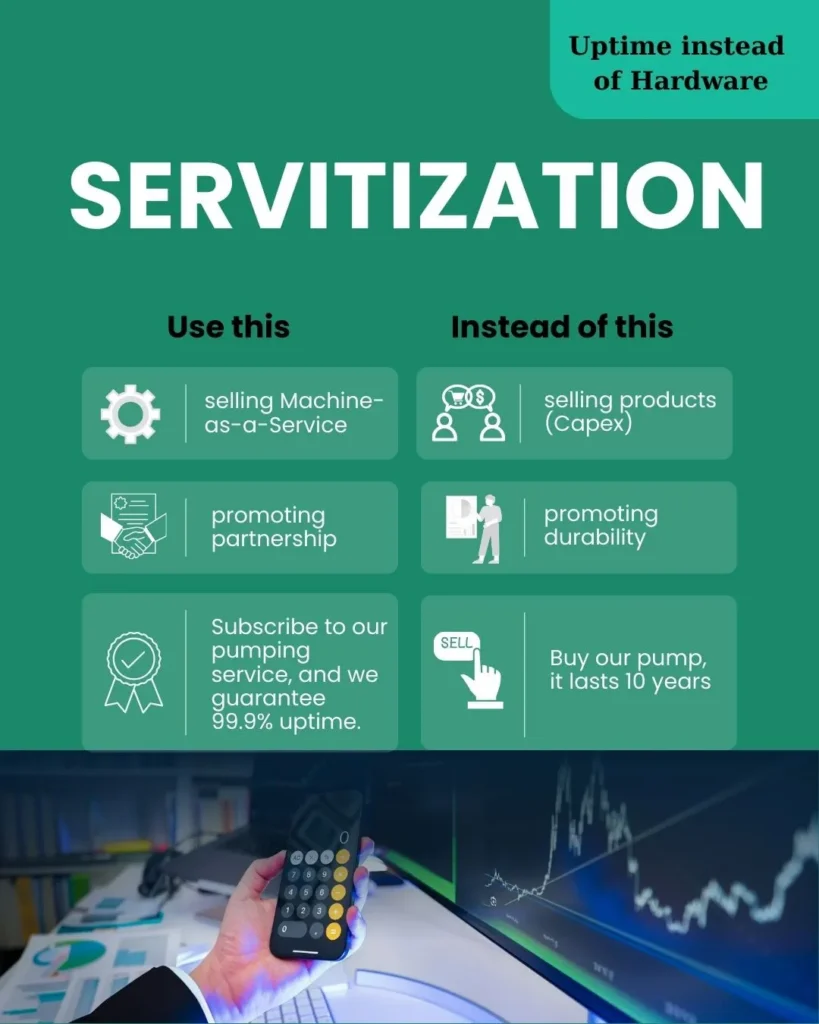
A major shift in business models is forcing a shift in marketing. Manufacturers are moving from selling products (Capex) to selling “Machine-as-a-Service” (Opex). Consequently, industrial branding must evolve from promoting “durability” to promoting “partnership.” The marketing message is no longer “Buy our pump, it lasts 10 years.” It is now “Subscribe to our pumping service, and we guarantee 99.9% uptime.” This requires marketing to be continuous. In B2B marketing 2026, the relationship doesn’t end at the sale; it begins there. Content must focus on predictive maintenance success stories, software updates, and continuous value delivery.
Conclusion The industrial giants of tomorrow are not just engineering leaders; they are communication leaders. By embracing Digital Twins, prioritizing sustainability data, and utilizing AI for hyper-relevance, companies can master B2B marketing 2026. The future of industrial sales is immersive, transparent, and service-oriented.
Ready to revolutionize your B2B strategy for 2026? Explore our Content Marketing solutions for the industrial sector.
- Digital twins – A digital twin is a digital model of an intended or actual real-world physical product, system, or process (a physical twin) that serves as a digital counterpart of it for purposes such as simulation, integration, testing, monitoring, and maintenance. ↩︎
- White paper – a persuasive, authoritative, in-depth report on a specific topic that presents a problem and provides a solution ↩︎
References
- McKinsey & Company – State of Marketing Europe 2026 https://adindex.ru/publication/analitics/search/339562/img/state-of-marketing-europe-2026.pdf;
- Anteriad & Ascend2 – UK B2B Marketing Edge: 5 Opportunities to Drive Growth in 2026 https://anteriad.com/hubfs/2025_B2B_Marketing_Edge/2025-UK-B2B-Marketing-Edge.pdf;
- Collective Measures – 2026 Trend Predictions Key industry-specific trends that will shape the marketing landscape next year https://www.collectivemeasures.com/wp-contentuploads/2025/11/2026Trends_B2B_Website.pdf