
For generations, the process of creating a custom home was defined by a fragmented, often adversarial relationship between the dreamers and the doers. The architect would draft a vision, the engineer would calculate the physics, and the builder would be left to interpret the reality – often leading to budget overruns, timeline delays, and compromised aesthetics. This traditional model, known as “Design-Bid-Build,” was fraught with inefficiencies, where critical information was lost in the handoffs between professional silos.
However, as we settle into the landscape of 2026, a radical transformation has standardized the industry. The era of fragmented silos is over. We have entered the age of Integrated Homebuilding. This approach does not merely place architects and contractors in the same room; it fuses their workflows into a single, digital, and operational organism. By leveraging advanced technology, shared data environments, and collaborative contractual frameworks, the industry has pivoted. What was once a luxury concept is now the gold standard, ensuring that the home you design is exactly the home that gets built, on time and on budget.
Through the adoption of seamless construction methodologies, the friction that once defined residential projects has been replaced by fluid precision.
The Return of the “Master Builder” (Digitized)
To understand the significance of Integrated Homebuilding, we must look at the past. Centuries ago, the “Master Builder” was a single entity responsible for both the design and the construction of a structure. Over the 20th century, specialization split this role, creating a divide where designers focused on form and builders focused on function.
In 2026, technology has allowed us to reclaim the “Master Builder” ethos, but with a modern twist. The integration is no longer about one person doing everything, but about a unified team operating from a “Single Source of Truth.”
In this new ecosystem, the architect, the interior designer, the mechanical engineer, and the general contractor are all stakeholders in the project from Day One. There is no “handover” of blueprints. Instead, there is a continuous loop of feedback. When an architect proposes a cantilevered balcony, the builder immediately weighs in on constructability, and the structural engineer updates the steel requirements in real-time. This collaborative friction at the beginning of the project eliminates the catastrophic clashes that used to happen on the job site.
The Tech Backbone: Digital Design-Build and BIM 2.0
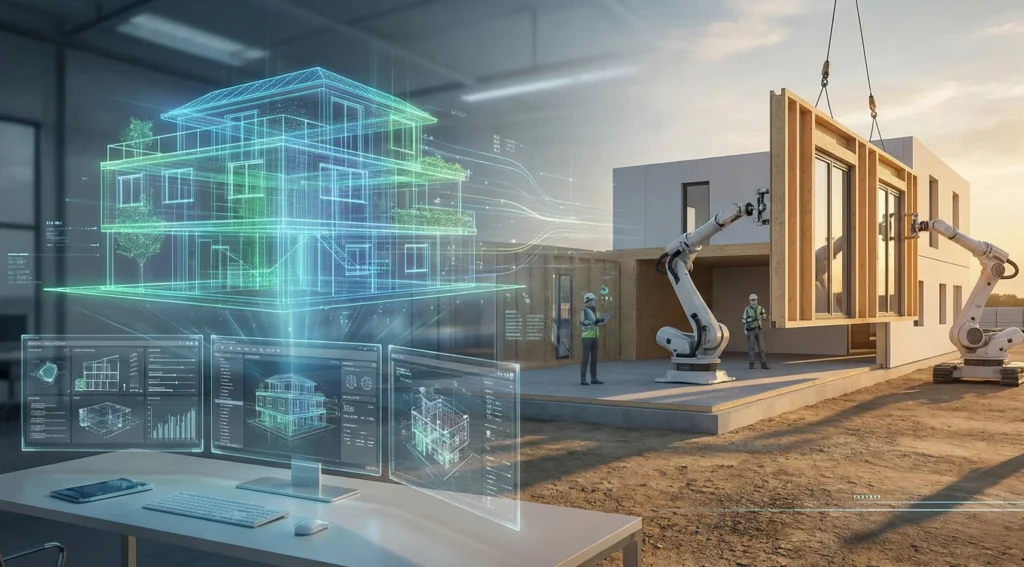
The engine driving this revolution is the maturity of Building Information Modeling (BIM) and the widespread adoption of Digital Design-Build methodologies.
In the past, BIM was a tool used primarily for massive commercial skyscrapers. By 2026, it has become the standard for residential construction. Blueprints are relics of the past. Instead, teams utilize a live, cloud-based 3D model that contains every single data point of the home—from the thermal rating of the triple-pane windows to the exact routing of the plumbing behind the shower walls.
This creates a workflow of Seamless Construction where:
- Predictive Clash Detection: Artificial Intelligence (AI) algorithms scan these models continuously. They can predict, for example, that a proposed HVAC duct will intersect with a structural beam. In the old world, this would be discovered on-site, stopping work for days. In 2026, the software flags it during the design phase, and it is resolved with a mouse click, not a jackhammer.
- Real-Time Costing: Perhaps the biggest pain point for homeowners has always been the budget. In the integrated model, the 3D design is linked directly to current material pricing databases. If a client decides to move a wall or change the flooring from oak to bamboo, the total project cost updates instantly. This transparency eliminates the dreaded “sticker shock” after the design is finalized.
The End of “Value Engineering”
One of the most frustrating aspects of traditional construction was “Value Engineering”—a polite term for cutting design features to save money after a budget overrun. It was the phase where the vision died.
With integrated homebuilding, value engineering happens during the design, not after. Because the builder provides input on cost implications while the architect is drawing, the team can find creative, cost-effective solutions that preserve the aesthetic intent.
By utilizing digital design-build tools midway through the project, the team can run simulations. For instance, they can determine if spending more on high-performance insulation will save enough money on the HVAC system to pay for itself. The result is a home that retains its architectural integrity because the budget was a design parameter, not an afterthought.
The Manufacturer Connection: Prefabrication and Modularity
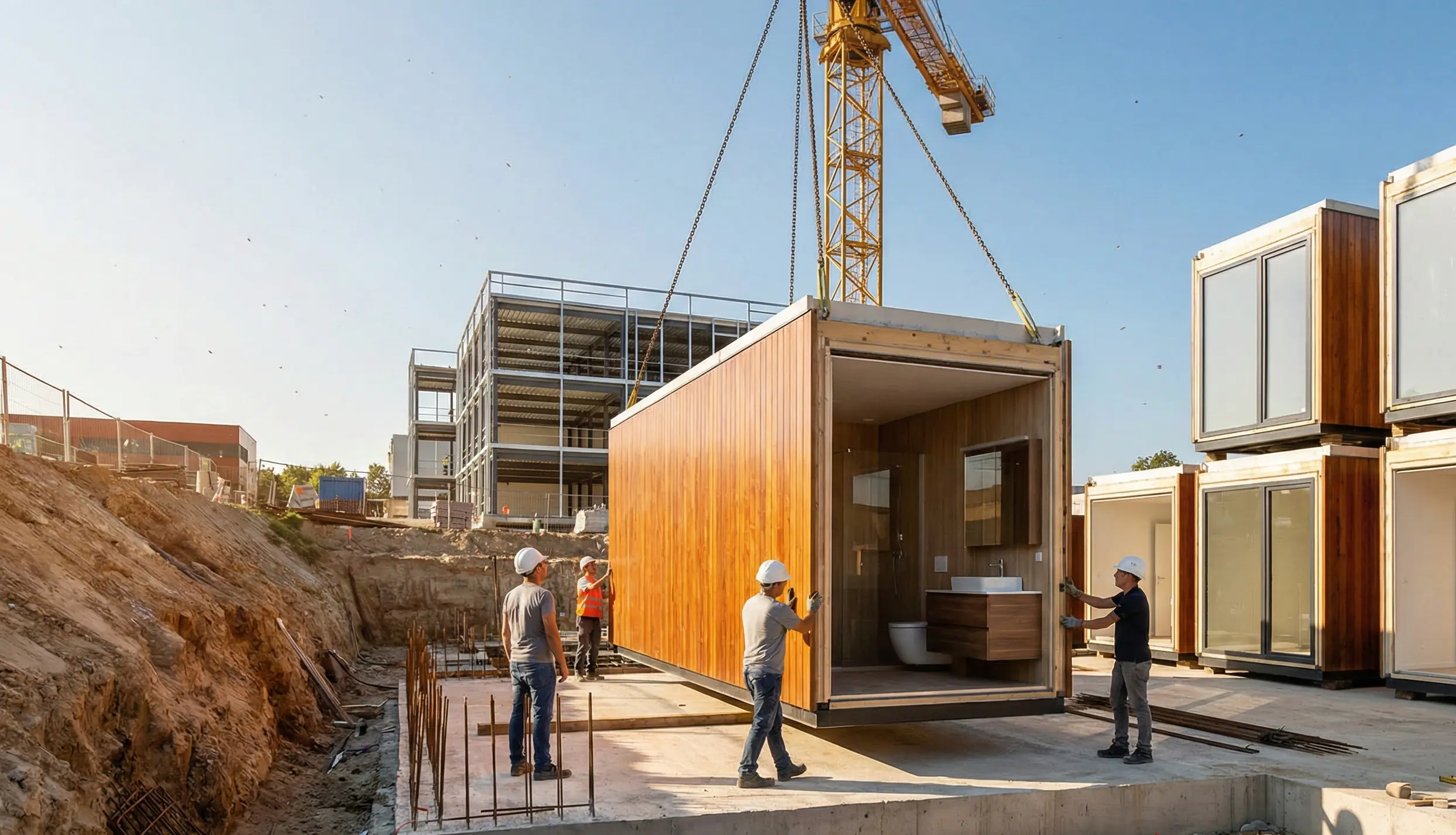
Another massive shift in 2026 is how seamless construction extends beyond the job site and into the factory. Because the digital models are so precise (down to the millimeter), builders can confidently outsource components to off-site factories.
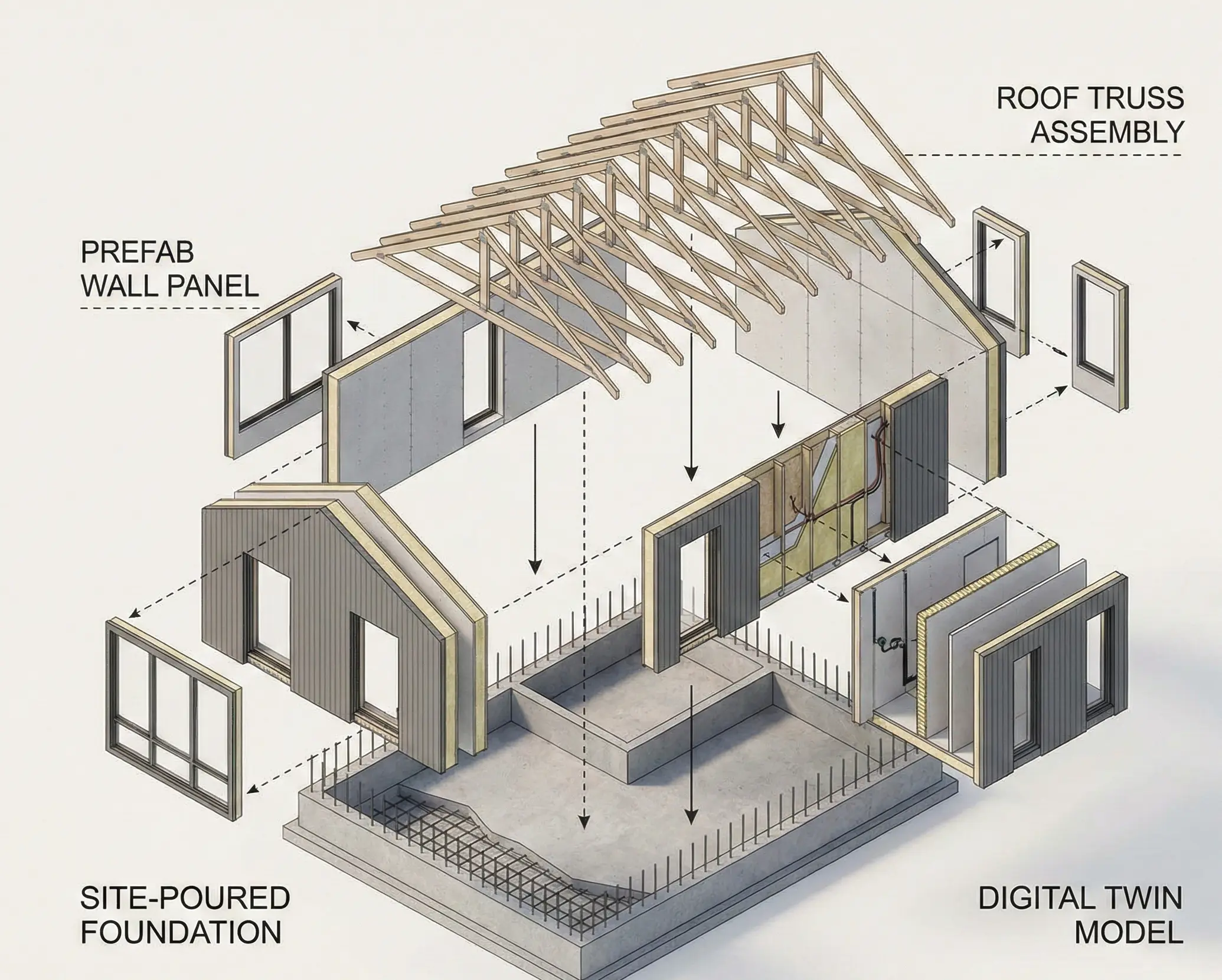
We are seeing a surge in “Hybrid Construction,” where the foundation is poured on-site, but complex elements like roof trusses, bathroom pods, and highly insulated wall panels are manufactured in controlled environments.
- Precision: Robots in factories cut wood and steel with laser precision, reducing waste to near zero.
- Speed: While the site is being excavated, the walls are being built simultaneously in a factory. This parallel processing can shave months off a typical construction schedule.
- Weather Immunity: Off-site construction is not delayed by rain, snow, or extreme heat, making the timeline reliable.
The Homeowner Experience: Radical Transparency
For the client, the adoption of integrated homebuilding offers an experience of unprecedented clarity. In the past, clients had to struggle to imagine how a 2D black-and-white floor plan would feel in reality.
Now, immersive Virtual Reality (VR) and Augmented Reality (AR) are standard parts of the client presentation. A homeowner can put on a headset and walk through their future kitchen. They can see how the morning light hits the countertop, test the height of the cabinets, and switch between different tile options with a wave of their hand.
This does more than just impress; it builds trust. The client isn’t just hoping the contractor understands the vision; they have virtually inhabited the vision together. It ensures that the emotional intent of the design is preserved through the harsh realities of construction.
Sustainability: The Green Byproduct of Integration
Finally, we must address the environmental impact. The construction industry has historically been one of the largest generators of waste. Up to 30% of materials in traditional builds ended up in landfills due to ordering errors, overage, or on-site modifications.
Integrated Homebuilding is inherently sustainable.
- Material Efficiency: Because the material list is generated from the precise 3D model, builders order exactly what is needed. There is no “extra” lumber rotting in a dumpster.
- Energy Performance: Architects and engineers simulate the home’s energy performance during the concept phase. They can rotate the digital house to optimize solar gain or adjust insulation thickness to meet Passive House standards before ground is broken.
Conclusion: A New Standard of Living
The housing industry has finally caught up with the digital revolution. The adversarial relationship between design and execution has been replaced by a symbiotic partnership that values data, transparency, and efficiency.
By 2026, seamless construction has proven that speed does not require sacrificing quality, and that custom design does not require financial chaos. Whether through AI-driven logistics, VR walkthroughs, or the precision of digital design-build, the result is a home building process that is predictable, enjoyable, and sustainable.
Ultimately, integrated homebuilding is not just a methodology or a buzzword, it is the assurance that the dream you envision is, down to the last nail, the reality you will live in.
References
- Temitope Omotayo – The Construction Industry’s Future → https://www.researchgate.net/publication/379858325_The_Construction_Industry%27s_Future;
- Jisang Lee, Jeehoon Kim, Nirjara Bongurala,
- Christopher Rausch, Vida Babajaniniashirvani, Andrew McCoy, Santiago Ossa, Nicole Jacobsen, Tanyel Bulbul – Leveraging Industrialized Construction to Address the U.S. Housing Crisis: A Comprehensive Review of the Housing Supply Chain → https://sites.utexas.edu/ethic/files/2025/05/20250129Final_Report_IC-technologies-for-housing-supply-chain-HUD-edits.pdf;
- Namtrungcons – Top 10 Building Materials Industry Trends and Innovations for 2026 → https://namtrungcons.vn/en/building-materials-industry-trends-2026/;
- mckinsey & company – The next normal in construction: How disruption is reshaping the world’s largest ecosystem → https://www.mckinsey.com/~/media/McKinsey/Industries/Capital%20Projects%20and%20Infrastructure/Our%20Insights/The%20next%20normal%20in%20construction/The-next-normal-in-construction.pdf;
- worldconstructiontoday – The Key Trends Shaping the Construction Industry in 2026 → https://www.worldconstructiontoday.com/industries/the-key-trends-shaping-the-construction-industry-in-2026/;
- Asli Pelin Gurgun – The Future of Construction: Integrating Innovative Technologies for Smarter Project Management → https://www.researchgate.net/publication/389696858_The_Future_of_Construction_Integrating_Innovative_Technologies_for_Smarter_Project_Management