
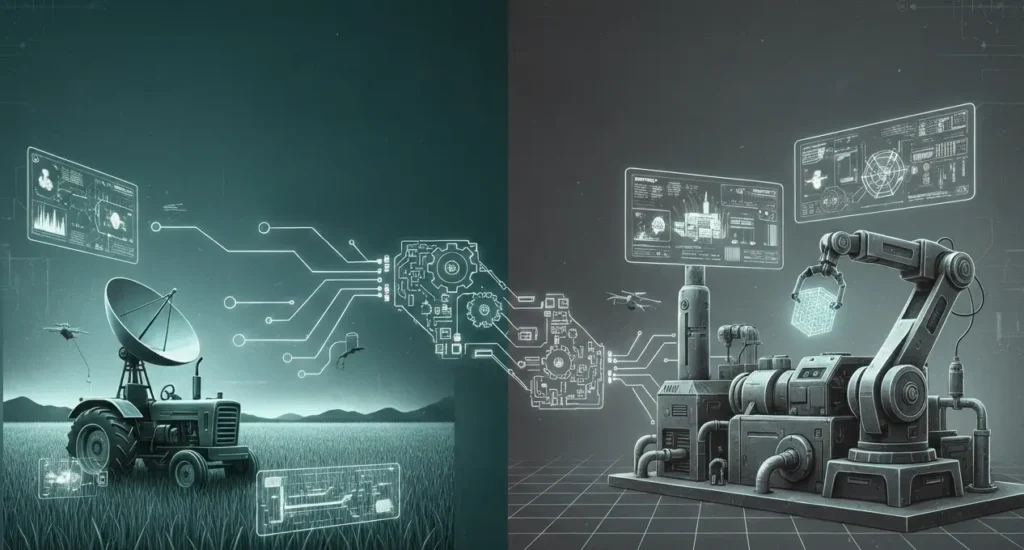
The global economy in 2026 stands at a fascinating crossroads where biology meets heavy machinery. As we face the dual pressures of a growing global population and increasingly volatile climate patterns, the integration of Smart Farming Solutions has moved from a luxury for tech-forward estates to a fundamental necessity for survival. This shift isn’t occurring in a vacuum; it is being propelled by a massive overhaul in the Sustainable Food Supply Chain, ensuring that the journey from seed to shelf is transparent, efficient, and carbon-conscious. For B2B stakeholders, the convergence of these fields represents the most significant investment opportunity of the decade. We are witnessing the birth of an ecosystem where data is as valuable as the soil itself, and where manufacturing efficiency is the primary driver of food security.
1. The Agri-Food Tech Revolution: Precision at Scale
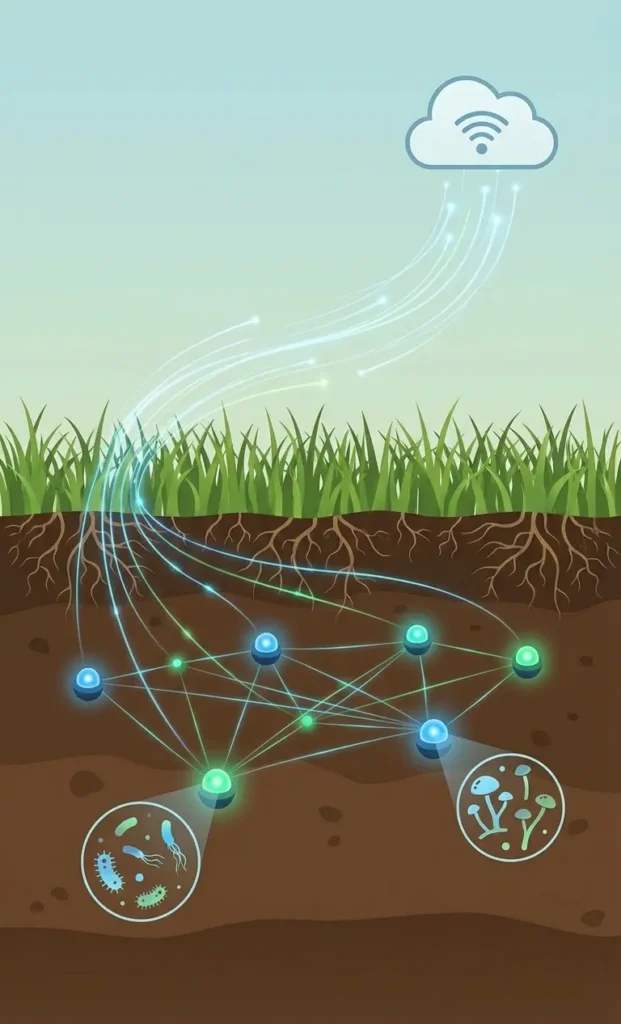
The first pillar of this transformation is the democratization of high-tech agriculture. In 2026, Smart Farming Solutions have evolved beyond simple GPS-guided tractors. We are now seeing the widespread implementation of “Internet of Everything” (IoE) sensors that monitor soil microbiome health in real-time. These sensors provide a granular level of data that allows for variable-rate application of nutrients, reducing waste by up to 40%.
But the tech doesn’t stop at the field. Food tech has moved into the laboratory and the vertical farm. Urban centers are now hubs of production, utilizing hydroponic and aeroponic systems that are managed by autonomous agents. This localized production is a key component of a Sustainable Food Supply Chain, reducing “food miles” and ensuring that fresh produce reaches consumers within hours of harvest, rather than days of shipping.
2. Manufacturing and the B2B Pivot
In the manufacturing sector, the narrative is dominated by the latest B2B Manufacturing Trends 2026. The most prominent trend is the shift from “Just-in-Time” to “Just-in-Case” manufacturing, supported by massive digital twin simulations. Factories are no longer rigid lines of heavy steel; they are modular, software-defined environments. B2B procurement has moved almost entirely to decentralized marketplaces where AI in Agri-Food Tech predicts raw material shortages before they happen, allowing manufacturers to pivot their production lines autonomously.
The interaction between the farm and the factory has become seamless. For instance, a manufacturer of specialized tractors now receives real-time wear-and-tear data from a fleet in the Midwest. Using this data, the factory can print 3D replacement parts and ship them via autonomous drones before the farmer even realizes a breakdown is imminent. This is the hallmark of the current B2B Manufacturing Trends 2026: a proactive, data-driven relationship that eliminates downtime.
3. The Digital Backbone: AI and Transparency
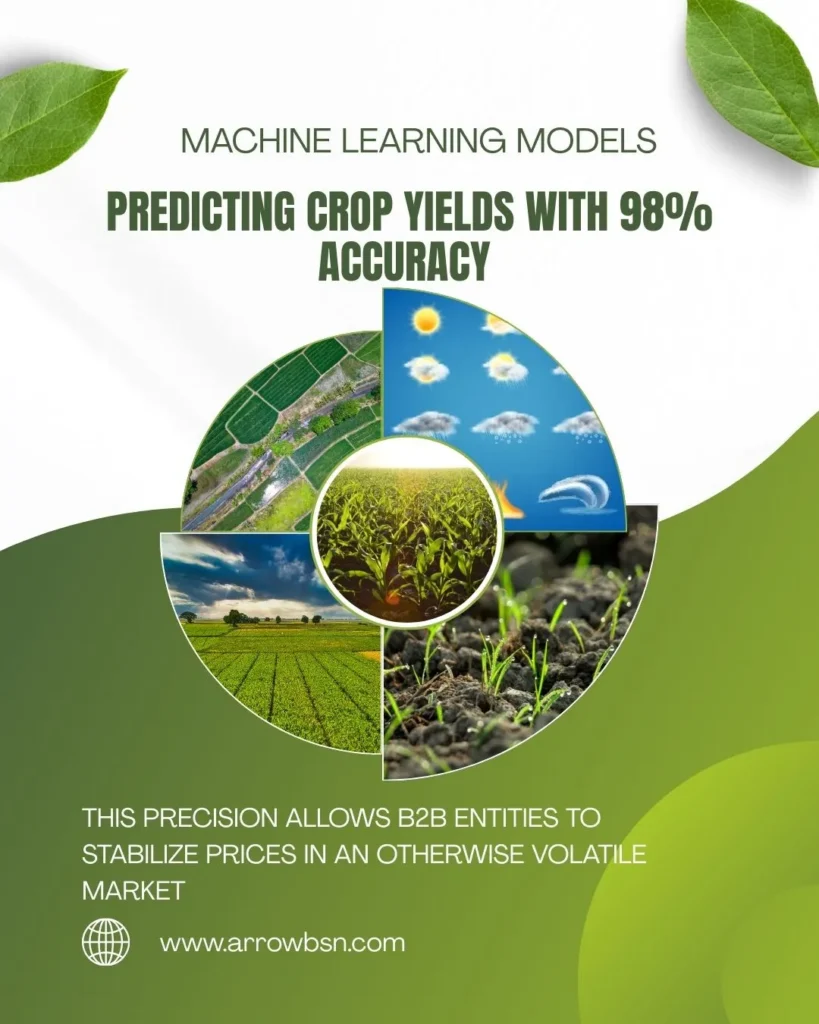
Midway through this decade, the role of AI in Agri-Food Tech has shifted from experimental to operational. Machine learning models are now capable of predicting crop yields with 98% accuracy by synthesizing satellite imagery, weather patterns, and historical soil data. This precision allows B2B entities to stabilize prices in an otherwise volatile market. When a procurement manager looks at the B2B Manufacturing Trends 2026, they see a landscape where risk is mitigated by transparency.
Furthermore, blockchain technology has finally found its “killer app” in the food sector. Every pallet of produce is tagged with a digital identity that records its entire lifecycle. This creates a truly Sustainable Food Supply Chain where consumers can scan a QR code to see not just where their food came from, but the exact carbon footprint generated during its manufacturing and transport. For B2B partners, this data is used to meet increasingly stringent ESG (Environmental, Social, and Governance) requirements, turning sustainability from a cost center into a competitive advantage.
4. The Human-Machine Collaboration
Despite the heavy emphasis on tech, 2026 has also highlighted the importance of human-centric design in Industrial Automation Systems. We are seeing the rise of “Cobots” (collaborative robots) in both food processing plants and manufacturing floors. These machines handle the repetitive, dangerous, or hyper-precise tasks, while human workers transition into roles as “System Architects” or “AI Handlers.”
In the B2B space, the relationship between suppliers and buyers has become more collaborative. Rather than simple transactional interactions, companies are forming “Innovation Clusters.” A food tech startup might work directly with a manufacturing giant to design a new type of biodegradable packaging, utilizing Industrial Automation Systems to scale production at a fraction of the traditional cost.
5. Scaling for a Global Population
The ultimate goal of combining Smart Farming Solutions with advanced manufacturing is to solve the calorie gap. By 2026, the global population’s demand for protein is at an all-time high. This has led to a surge in B2B investments in alternative protein manufacturing. Whether it is plant-based, fermentation-derived, or cell-cultivated, the infrastructure required to produce these foods at scale depends entirely on the sophistication of Industrial Automation Systems. These plants operate 24/7, with minimal human intervention, utilizing AI to optimize energy consumption and ingredient ratios in real-time.
6. Logistics and the Autonomous Frontier
Logistics is the final frontier in the Sustainable Food Supply Chain. In 2026, the “last mile” is being conquered by autonomous delivery bots and electric freight. B2B manufacturers are utilizing “Physical Internet” concepts, where cargo is modularized and moved through shared, automated hubs. This reduces the number of empty trucks on the road and significantly lowers the overhead for small-to-medium enterprises (SMEs) trying to enter the agri-food market.
The integration of AI in Agri-Food Tech ensures that logistics are predictive. If a heatwave is predicted in a certain region, the system automatically reroutes perishable goods or adjusts the cooling settings in the automated containers to prevent spoilage. This level of control was unimaginable just five years ago.
Conclusion: The New Industrial Standard
In conclusion, the convergence of agriculture and manufacturing is no longer a futuristic concept; it is the reality of our current economy. The implementation of Smart Farming Solutions has revolutionized how we interact with the earth, while the evolving B2B Manufacturing Trends 2026 have redefined how we process and distribute its bounty. We have successfully built a more Sustainable Food Supply Chain that prioritizes both planet and profit.
As we look toward the second half of the decade, the reliance on AI in Agri-Food Tech will only deepen, creating a world where hunger is a logistical problem rather than a resource problem. The final piece of the puzzle remains the continued refinement of Industrial Automation Systems, which provide the muscle behind the digital brain. For businesses and consumers alike, the message is clear: the future is automated, it is intelligent, and it is sustainable. The era of industrial-agricultural synergy is here to stay, and those who master these tools will lead the global market for years to come.
References
- AgFunder – David Pierson: ‘Disruptive innovation has a way of making an unannounced appearance, so we are careful not to wear blinders.’ → https://agfundernews.com/agtech-isnt-dead-just-sobering-up-says-syngenta-group-ventures-md-now-is-the-time-to-deploy-capital;
- European Comission – The future of farming is here → https://digital-strategy.ec.europa.eu/en/policies/future-farming;
- StartUs Insights – Agriculture Report 2026: Industry Data & Insights → https://www.startus-insights.com/innovators-guide/agriculture-report/.